Shower Waterproof Membrane - A Brief History
You might be wondering, “Is the shower waterproof membrane a new thing?” and “Why did the industry decide to abandon old-school strategies?”.
Well, those are good questions. And the answer to those questions provides a good background for this post about waterproofing products and systems.
The shower waterproof membrane is not really a new thing. In the past (20+ years ago) the shower pan assembly always incorporated a membrane to reduce the risk of water and moisture infiltration, but never the walls. It was assumed that the tiled walls surrounding your shower were basically waterproof.
Older homes were also quite drafty with significant air leakage between the interior and exterior. Moisture that made it out of the shower stall and into the surrounding framing could often evaporate under these conditions.
This resulted in a far less comfortable home that was expensive to heat, but it also lessened the danger of mold growth, dry rot, and mold toxins being trapped in your home... but it didn't solve the problem.
Ultimately all these showers failed prematurely regardless of the build quality. Ceramic tile assemblies usually failed faster than porcelain because of higher absorption rates through the tile, but they all eventually failed.
Old School Shower Pan Liner
Because the shower floor is a horizontal surface always immersed in water, it is a very intuitive place to install some measures to prevent water from getting underneath and rotting your floor framing.
Traditionally, these measures usually involved the installation of a rubber or copper shower pan liner below a traditional mortar base to protect the subfloor beneath. "Hot mopping" is another method to create a waterproof layer beneath the mortar base (same method used for creating the waterproof underlayment for flat roofs).
These methods are still used today by many installers that subscribe to the “if it aint broke, no need to fix it” school of thought.
If installed correctly, these old-school methods did exactly what they were supposed to do; keep water from getting into the subfloor and wall base framing. But... there are fundamental flaws with these "water in, water out" systems, as well as soooo many things that can go wrong if installed incorrectly (the rule, not the exception).
If you'd like to know more about this archaic system, please check out my Waterproofing Shower Walls post.
Old School Shower Wall Waterproofing
Before the shower waterproof membrane systems were developed, there wasn’t really any consistently applied waterproofing strategies for the shower walls except for the shower pan liner which usually ran up the wall only about 8 inches above the shower base.
Most building codes also required that a vapour retarder membrane (plastic sheet or building felt) be installed between the studs and the backer board on outside facing walls, to limit moisture transfer into the framing.
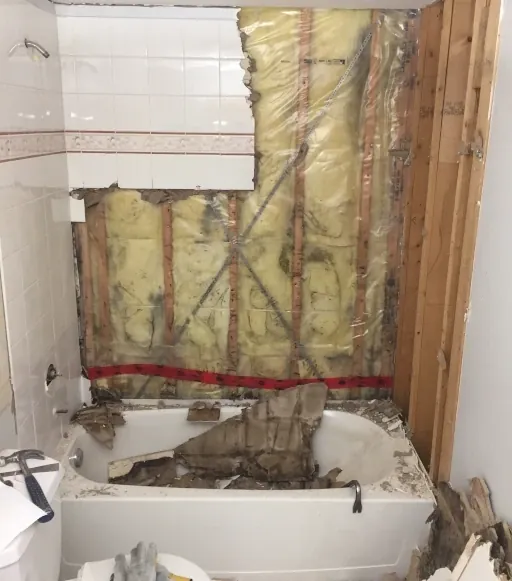
This code rule is still in place today in most parts of the world, but it’s always had serious limitations, such as inconsistent coverage, varying degrees of moisture permeability, AND that it served as a moisture condensation surface where black mold could grow (notice the black mold on the back of the drywall piece in the tub image below).
Old School Wall Recesses and Niches
It is easy to see how shower nooks and niches could be the cause of major water infiltration issues in the showers of the past, when they still cause problems in some showers today.
A hole in the shower wall was always a risky undertaking and almost always resulted in water running into the shower wall, no matter how careful the contractor was when building them.
There were also no preformed ready to install tile-ready foam shower niches back then, let alone quick to install finished shower niches. All these wall nooks, niches and soap trays had to be custom built by the framer and/ or tiling contractor.
They had to use the materials available at the time, so wood studs framed it, tar paper “waterproofed” it, gypsum wall board lined it, and tiles were laid over it. At the time, tile and grout were considered to be relatively impermeable to water so it was not considered to be a problem.
This was a grossly mistaken assumption, but fairly common during that period. Needless to say, it didn’t take long for these assemblies to rot, causing the tiles to break off and water to get into the wall framing.
A New Way to Waterproof
The new membrane technology has basically solved all of the problems of the past, by placing the waterproofing layer directly beneath the tile layer and combining it with decoupling.
The term "Waterproofing" is somewhat intuitive to most people and seems like an important priority even if they're ignorant of the details however, "uncoupling" or "decoupling" is not so easy to relate to for the average Joe Homeowner. There are some complex physics involved in these systems and frankly most tiling professionals don’t really have a clue either.
I will attempt to explain the basics of uncoupling in the next couple of sections.
Crack Isolation Membranes
The explanation of how crack isolation membranes (CIM) work also helps highlight the advantages of "uncoupling" when it comes to shower wall waterproof membranes. I will attempt to clarify this concept.
Most of you have probably seen tiled floors that have cracked along their grout lines, sometimes quite dramatically. This is often the result of a crack in the concrete floor beneath the tile.
When the tile is firmly attached to a concrete subfloor, the crack that forms in the subfloor will crack the tile assembly attached to it as well, usually separating along the grout lines. This horizontal movement can also cause tile delamination around the crack.
A crack isolation membrane is basically just a thicker and heftier version of a shower waterproof membrane that's designed to separate the substrate from the tile assembly above it (tile, grout, thinset) so that the tile assembly can move independent from the substrate. Depending on the CIM, the tile assembly installed on top of it may be able to move laterally by as much as 1/8″ because the membrane will literally stretch to accommodate the movement.
That means that if the a crack forms in the concrete floor beneath your floor tiles, the tile assembly does not crack - this is assuming the crack is relatively small and the CIM is rated for this degree of movement.
Uncoupling Membranes in the Shower
Because the shower floor and shower walls are exposed to lots of moisture and wide temperature changes, the substrate under your tile assembly can also move a little. Not enough to require a crack isolation membrane, but enough to require a decoupling membrane.
Without an uncoupling membrane, the framing and backer board assembly on each surrounding wall moves independently, causing grout line cracking and tile delamination, especially at the corners where the walls and floors meet.
Uncoupling can solve this problem by essentially disconnecting the top tile layer from the bottom backer board/ framing layer. This is accomplished by the mortar attaching not to the membrane sheet itself, but to the fleece fibers (tiny plastic hairs) on each side of the sheet. This creates a tiny gap at the base of the fleece on each side of the membrane sheet.
This tiny gap allows the assembly on top side of the membrane to move enough to allow the tile, grout and mortar to essentially float over the backer board while still able to carry a significant load.
Genius, right? I wish I would have invented it!
There are some liquid waterproofing membranes that also claim to be uncoupling membranes, relying on their thickness and "strechiness" to allow the substrate to move slightly without cracking the tile above it. This is a real stretch in my professional opinion. A liquid membrane might be able to provide adequate waterproofing protection if correctly applied, but not adequate uncoupling.
The "Waterproof" Shower
I should make it clear that there's no such thing as the perfect shower waterproof membrane. A "waterproof" shower is certainly possible, but that's pretty easy to achieve considering that "waterproof" simply means to keep liquid water from running into your wall. A "vapor proof" shower on the other hand, is pretty much impossible.
Waterproofing membranes belong to larger classification of Vapor Retarders. Any vapor retarder will only limit the amount of moisture that can pass through it, not eliminate it.
Vapor retarders are rated as to their moisture permeability and given a “perm rating” that represents how much water vapour will pass through the material in a given period of time at a given pressure (1 grain of water vapor per hour, per square foot, per inch of mercury).
There are three vapor retarder classes that all waterproofing material’s fall into.
Class I: 0.1 perm or less (these are generally considered vapor barriers).
Class II: 0.1 – 1.0 perm
Class III: 1.0 – 10 perms
Most shower waterproofing membranes fall into Class II but some end up in Class III as well. The bottom line is, the lower the perm rating, the less moisture will get through the membrane.
There are not a lot of established requirements when it comes to the definition of a waterproofing membrane for use in a shower environment. The only rules that have been established are related specifically to steam showers. If you are interested in the specifics of the testing procedure, it can be purchased from ASTM International: Procedure E of ASTM E96.
I will explain the significance of perm ratings for different shower installations a little later when I give you my opinion and recommendations.
Types of Waterproofing Membranes
Sheet Waterproofing Membranes
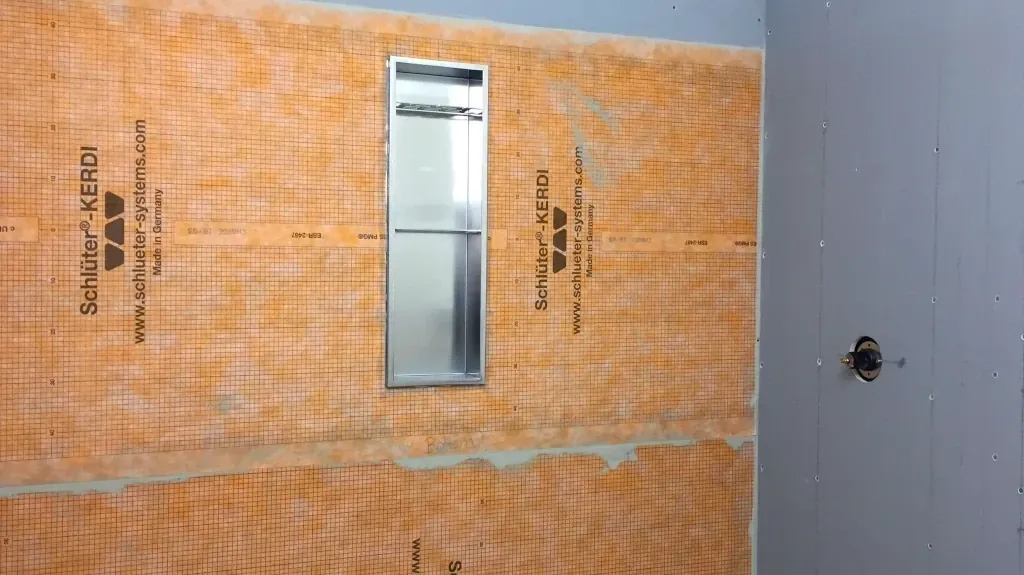
The sheet membrane is exemplified by the brand leader in the industry, Schluter Systems and their Kerdi waterproofing membrane (seen above), but there are several other brands as well (more on brands later).
These sheet membranes are made from a blend of plastic compounds designed to be attached on the surface of the tile backer board and shower base with either a thin layer of tile mortar, or “peel and stick”.
The peel and stick shower membrane only requires a primer to be applied before sticking it to the backer board or shower pan. These are not too common in the US but more common internationally.
To seal the corners of the shower surround, these shower waterproofing systems use preformed / molded membrane pieces sold separately. You apply these with mortar or stick them in place, similar to the membrane application.
Your wall tile and shower floor tile is then attached to the membrane with a layer of thin-set mortar in the same way you would set any tile, using the appropriately sized notched trowel.
Both front and back surfaces of the membrane are specifically designed to bond to most thin-set tile mortars.
Waterproof Shower Paint
Waterproof paint for shower or "liquid waterproofing membrane" is exemplified by the most popular of these products, Redgard Waterproofing Membrane by Custom Building Products, although there are also a number of other brands out there (more on that later).
This type of product can be considered a waterproof shower paint because the most common method of application is with a paint roller, but you can also spray it on with a paint sprayer.
After it dries it turns into an elastomeric (rubber like) layer which stays flexible.
This is the cheapest and easiest way to waterproof your shower walls and shower floor and it does provide good protection in most cases if applied correctly, and you pick the right product, and the weather is not too cold or too wet.
Some of liquid membrane manufacturers claim that they can also serve as a crack isolation membrane if they are applied a little thicker.
Waterproof Board for Shower
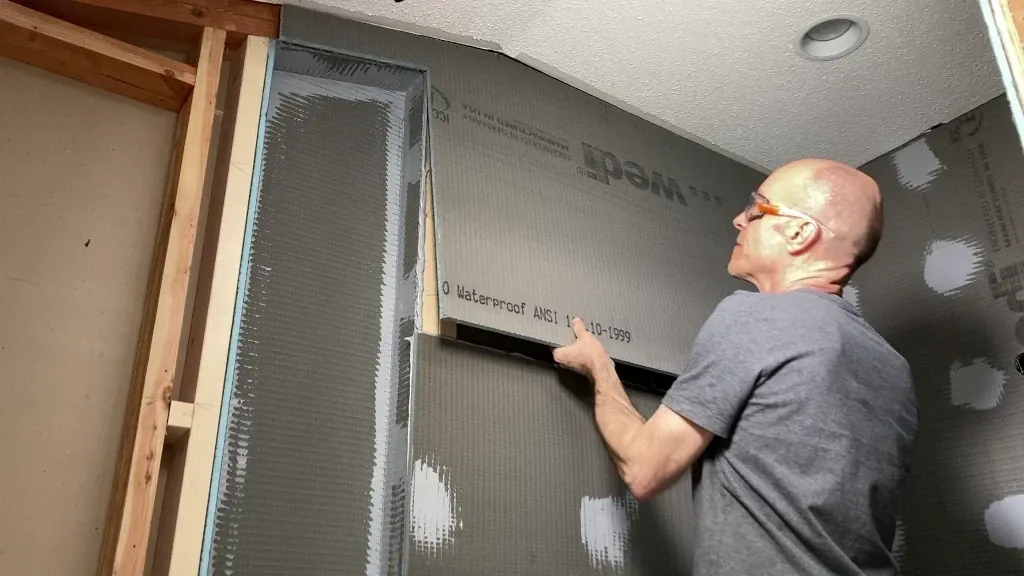
The only backer board that is considered "waterproof" are the foam backer board panels. The most popular of these is Kerdi Board by Schluter Systems and the next in line is Wedi Building Board (seen in the image above)
As I mentioned earlier, these panels are not actually moisture proof, but you could call them "waterproof" in the sense that water will not pass through them easily. In other words, not a very useful term.
Just like ordinary tile backer boards, they can serve as a structural, dimensionally stable and load bearing substrate for tile as well as a waterproofing shower membrane.
These panels are made from extruded polystyrene foam and have a layer of material on both sides designed for tile mortar bonding.
This bonding layer is most often a plastic fabric designed for bonding however, there are a couple of products that have a cementitious material bonded to their outer surface.
They are attached to the wall with specially designed fasteners, with washers to prevent the screw head from pulling through the material. The fasteners are later covered with adhesive or a small piece of membrane to maintain membrane integrity. The seams are also sealed together with membrane tape with thinset, or simply by gluing them together with sealant.
The wall boards come in various thicknesses to allow you to use them as building panels as well as backer boards. Most manufacturers are encouraging their use for quick and easy shower bench construction as well as waterproof partition walls, tub decks, etc.
If you’d like to read more about foam backer boards (and other tile backer boards), check out my Cement Backer Board for Showers - Busting the Myths.
Foam Shower Pans/ Trays/ Bases
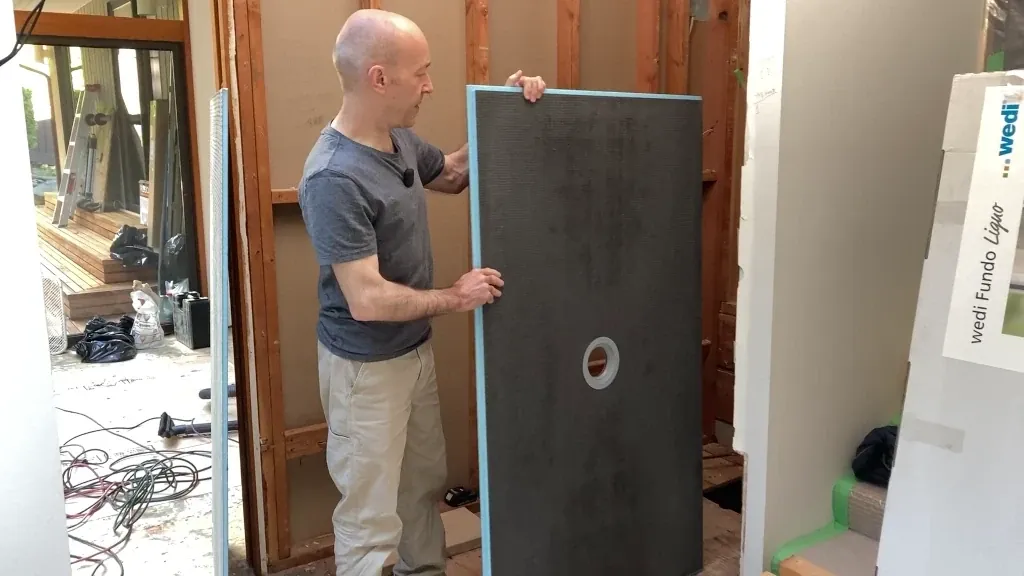
A foam shower trays/ pan can also be considered a shower waterproof membrane because it inhibits moisture transmission through to the substrate and is an essential part of most modern shower waterproofing systems.
These trays are attached to the substrate with thinset mortar and are joined to the vertical side wall panels with either adhesive or a strip of membrane tape attached with thinset mortar, depending on the manufacturer. The same method used to attach the corner seams is used on the board-to board seams as well.
These trays are usually sold in kits and often including the curb, membrane bonding shower drain, tape for the seams, and joint sealant.
The shower bases are formed from the same foam material as the wall boards, some having a thin cementitious layer on their surface and some not (more on the this in the Foam Shower Wall Panels, Bases & Shower Niches section below).
There are some standard size shower base and shower pan kits with either right hand, middle, or left hand drain orientations. And because they are made from foam, they can easily be trimmed to match your shower size and drain position by using a circular saw, hand saw or even a utility knife.
There is no need to pre-slope the subfloor or install a rubber or metal shower pan liner to the subfloor with this system. The foam pan simply bonds to the unaltered subfloor with thin-set tiling mortar.
Shower Waterproofing Products
I've gone over the various types of membranes above. Now it’s time to give you a rundown of the brands of waterproof shower membrane within these categories.
I’ll try to go over their distinguishing features as well as my preferred products.
Sheet Waterproof Membranes
I will be listing a few of my favorite sheet shower waterproof membrane products in order of their perm rating, starting from the lowest (least permeable) to the highest.
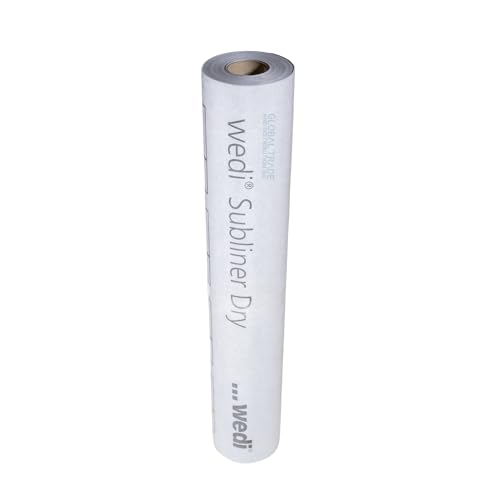
Wedi Subliner Dry:
Ad: The image above and one text link below are Amazon affiliate links. See affiliate disclosure page for details.
Subliner Dry sheet shower waterproof membrane system was engineered for the high water vapor environment of steam shower. The difference is that this membrane has an exceptionally low .05 perm rating according to the manufacturer.
As far as I know, Wedi Subliner Dry shower waterproof membrane has the lowest perm rating of all the sheet membranes available.
It is also engineered so it can be used on both shower walls and bases.
In addition to their sheet membrane, Wedi also has a range of polystyrene foam products that make up an entire wet room system. This includes shower bases, niches and building panels.
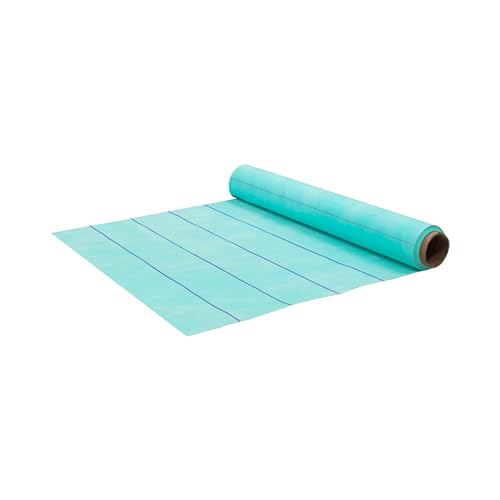
Noble Company:
Ad: The image above and one text link below are Amazon affiliate links. See affiliate disclosure page for details.
Noble has a few good sheet shower waterproof membrane products. Their AquaSeal membrane is one of their less expensive with a perm rating of “less than 0.5 perms”, which makes it slightly better than the Schluter Kerdi membrane, the most popular shower waterproofing membrane out there.
I prefer their NobleSeal TS membrane because of its ultra-low rating of .15 perms. This makes it one of the best waterproof membrane for shower walls and pans/ bases.
Noble also offers a range of extruded polystyrene foam products including preformed benches, niches, and bases.
Schluter Kerdi:
Ad: The image above and one text link below are Amazon affiliate links. See affiliate disclosure page for details.
The Schluter Kerdi shower waterproof membrane is by far the most popular sheet membrane at the moment.
Schluter originally claimed that only unmodified mortar can be used to attach their membrane because it’s composed of lime-based cement, which can easily cure under a vapour retarder like Kerdi. Modified mortars apparently can take too long to cure, compromising their bond strength.
Now Schluter Systems makes their own modified thin set mortars that can apparently be used above and below their Kerdi and Ditra membranes.
According to Schluter, if you follow the application instructions you should be able to tile over Kerdi immediately after it’s installed, which is common for most sheet membranes.
The standard Kerdi membrane has a perm rating of .75 but Kerdi DS has a .19 perm rating. Kerdi DS was engineered for the harsh environments of steam showers.
Liquid Waterproofing Membranes
Redgard Waterproofing Membrane Coating:
Ad: The image above and one text link below are Amazon affiliate links. See affiliate disclosure page for details.
As I have already mentioned, Redgard is the most popular and the most talked about liquid shower waterproof membrane out there.
All liquid waterproofing membranes are applied either with a brush and roller that would be used for painting, or sprayed on with a paint sprayer. Most professionals and DIY’ers use a roller and brush.
The use of a wet film thickness gauge (supplied) is recommended with all liquid membranes as well. This ensures that it is applied to the correct thickness. If it is not, it will compromise its waterproofing qualities (and its warrantee).
Joints or changes in plane (wall to floor) can be reinforced with fiberglass mesh tape and recoated with Redgard if you want “extra protection”, but this is not a requirement according to the application instructions.
This type of shower waterproof membrane requires at least 2 applications for it to have the proper thickness. In warm dry weather it can dry very quickly but may take up to several hours between coats and again before tile can be applied over it.
You must allow 12 hours to cure before flood testing.
Redgard has a perm rating of .36 when applied according to the application instructions.
Mapelastic Aquadefense:
Ad: The image above and one text link below are Amazon affiliate links. See affiliate disclosure page for details.
Mapelastic Aquadefense liquid shower waterproof membrane is also quite popular and effective if applied according to the instructions. It basically has the same application procedures and limitations as the other liquid membranes.
The manufacturer says that a reinforcing tape in the corners and seams is optional but they also sell this type of product (Mapeband) if you want to “provide additional protection”.
It can also be used as a crack isolation membrane up to 1/8″ according to the specs.
Aquadefense has a perm rating of <.5 according to the manufacturer which is intentional because they engineered it to meet the requirements for steam shower waterproofing membranes (Procedure E of ASTM E96).
Laticrete Hydro Ban:
Ad: The image above and one text link below are Amazon affiliate links. See affiliate disclosure page for details.
Hydro Ban is also a very popular liquid shower waterproof membrane, but it has a significantly higher perm rating (more permeable) at 1.25 perms, so it's not rated for steam showers.
There is also a newer product, Hydro Ban XP that they say is "steam room and steam shower compatible and comes with a lifetime warranty" but they don't get into details about perm ratings.
Both can also be used as a crack isolation membrane and do not require any reinforcing mesh be applied at the seams or corners according to the application instructions.
AquaBlue Liquid Waterproofing - Noble Company
AquaBlue is Noble Company's liquid membrane.
The spec sheet for this product states "When used in conjunction with Noble Company Sheet Membranes as the pan material, the warranty of the “system” matches the warranty of the sheet membrane."
It also indicates that its Perm Rating is "Residential" which means that it's not rated for steam showers.
Foam Shower Wall Panels, Bases & Niches
There are a fair number of companies producing and selling prefabricated foam wall panels, shower bases and niches. All of these products can be considered part of a complete shower waterproof membrane system.
These products are extremely popular because they include structural wall and floor components to construct an entire shower or wet room, and waterproofing is built-in because of their moisture resistant foam core.
This makes building and waterproofing far quicker and easier than ever before.
Here are a few of them:
Kerdi Board:
As I already mentioned, Kerdi Board is the most popular of the foam backer boards out there. They also make the most popular foam shower tray/base available.
Their wall boards come in 1/2″, 5/8″, 3/4″ and 2″ thicknesses and have a reinforcement layer on each side to create more structurally stability and to facilitate tile mortar bonding.
Their 1/2″ board is typically the one used in place of a standard tile backer board on the shower wall.
Without any waterproofing additional membrane attached, it makes a decent waterproof membrane with a .36 perm rating. With a perm rating under .5, it can be used for steam showers installations according to the Tile Council of North America.
There is also a series of Kerdi Board prefab shower niches that are tile ready.
Kerdi Shower Tray:
Schluter also sells a prefab foam base (or tray) that dominates the market.
This base is fixed to the subfloor via unmodified thinset mortar (explained in Kerdi membrane section).
The Kerdi Shower Kit also comes with a custom drain that has a built-in bonding flange, as well as a curb and Kerdi Band joint tape.
Ad: The text link above is an Amazon affiliate link. See affiliate disclosure page for details.
ProBase:
ProBase is unique among its competitors because it has a fleece covered membrane bonded to its surface. This fleece allows for extremely secure mortar & tile bonding along with decoupling.
The fleece coating means that no additional membrane attachment is required for tiles to bond to it. The custom drain assembly also bonds easily to its surface, maintaining the integrity of the membrane.
Noble also has a selection of foam shower niches and benches.
Wedi:
Wedi has a whole range of foam shower bases, backer board panels, benches, niches and thicker building panels.
These products are unusual because they are some of the very few products in the industry that have a cement coating on their surface to improve mortar and tile bonding.
This means that the surface is tile ready without any additional membrane attachment required.
Ad: The text link above is an Amazon affiliate link. See affiliate disclosure page for details.
Hydro-Blok:
The Hydro-Blok system is very similar to the Wedi system and includes all the same of prefab foam products.
Another similarity is its cement coating. These products also install and integrate with the waterproofing membrane and shower drain assembly, just like Wedi.
Ad: The text link above is an Amazon affiliate link. See affiliate disclosure page for details.
This Contractor’s Opinions and Preferences
The Best Waterproofing Membrane for Shower?
My simple answer for the best waterproofing method available for your shower would be to use a sheet membrane with the lowest permeability available.
My top preferce is always Wedi Subliner Dry. If it's not available, I will choose either Durock sheet membrane, NobleSeal TS, or Kerdi DS, because they have the lowest perm ratings.
That would be my simple all-around recommendation because these very low perm ratings allow you to properly waterproof outside walls as well. However, some would say that these membranes are a bit expensive and a bit overkill for interior walls, which I couldn't disagree with.
Best Shower Waterproof Membrane for Exterior Walls
As I mentioned above, I use Wedi Subliner Dry in most of my remodel jobs, simply because most of the showers I remodel are on the perimeter of the home, meaning one of the shower walls is often an outside wall.
I also prefer to install Hardibacker as my tile backer board, along with the Subliner Dry. I prefer to use these products together because this board they combine great waterproofing with awesome structure. A more rigid board like this helps to make the entire tile assembly more rigid, which is more important on outside walls because they're almost always load bearing walls.
When a shower is on an outside wall, it creates condensation issues inside the wall that do not occur in interior shower walls.
Even the best shower waterproof membrane will let a little bit of moisture through the tile assembly and into the stud cavity, so installing the membrane with the best perm rating is always the safest way to deal with this problem.
I will explain this whole complicated process in more detail in my "Common Shower Waterproofing Mistakes to Avoid" post, which I'll be publishing very soon.
Best Waterproof Membrane for Interior Walls
My recommendation for waterproofing interior shower walls (when no shower wall is bordering an exterior wall of your home) is to use Wedi Backer Board (Building Board).
This allows you to install only the backer board and avoid any "waterproofing" steps altogether, since these panels are already "waterproof" and have an adequate perm rating for interior wall installations.
Wedi Building Board is easier to handle and more durable than most of its competitors because of its cement surface coating. It's also easier to install because the boards are "glued" together with sealant during installation. This eliminates the extra step of applying seam tape, which is a requirement of some competing brands.
It's also easy to cut which makes it ideal for custom elements such as shower wall recesses. I used Wedi Board exclusively in one of my recent projects, where I installed a custom floor to ceiling shower recess with stainless steel shelves.
Best Waterproofing Systems for Shower Floor
I also recommend the Wedi foam trays for waterproofing your shower floor. This is a foam tray that's super rigid compared to its non-cement coated competition, which keeps it from getting damaged during wall tile installation.
Not only is it rigid and durable, it also installs easily, and fully integrates with the Wedi wall panels using their Wedi Joint Sealant. This makes the perpendicular joints between walls and floor totally waterproof, which is traditionally a problematic joint in shower builds.
In the same project I mentioned above I installed a Wedi Fudo Ligno Tray, one of the recessed shower pans by Wedi. This model gets recessed 3/4 inch below the subfloor to match up with the surrounding bathroom floor tile to create a truly barrier free or curbless shower.
This was part of an entire Wedi shower system install that I completed recently for a client. You can check out my DIY Walk In Shower post to see all the details.
FAQ
What is a shower waterproof membrane and why is it important?
A shower waterproof membrane is a specially designed thin plastic/ polymer membrane that separates the tile layer from the backer board layer in tile installations. It reduces water vapor transmission through these layers into the stud cavity, which in turn reduces vapor condensation, mold growth, and framing damage.
How do I choose the best waterproof membrane for my shower?
It depends on whether the shower wall is an on an outside wall or inside wall. Inside wall waterproofing can be accomplished with any paint-on liquid membrane or foam backer board panel. Outside walls need a sheet membrane with a higher Perm Rating to prevent moisture condensation inside the wall.
Does every shower wall need an additional waterproof membrane?
Yes, every shower wall should have a shower waterproof membrane to eliminate leaks and reduce vapor transmission into the stud cavity and floor framing. This will prevent water damage that might occur if water vapor condenses in this space, or if there's a breach in the tile assembly.
What common mistakes should I avoid when installing a shower waterproof membrane?
A common mistake is not removing the vapor retarder plastic sheet on the stud face of an outside shower wall before installing the tile backer board. There should be only one waterproofing layer on an outside shower wall, and it should only be applied to the backer board surface before tile installation.
What are the basic steps to install a waterproof membrane in a shower before tiling?
Steps: 1. Apply thinset mortar (slightly thinner mix) to backer board surface with 1/8" notched trowel. OR for liquid membranes, apply reinforcing tape to all edges and corners. 2. Apply sheet membrane using a grout float to imbed into thinset, ensuring no air bubbles, OR apply 2-3 coats of liquid membrane evenly with a paint roller or sprayer. 3. If applying a sheet membrane, apply corner membrane tape to all edges and corners with thinset.
Wrap Up
As a remodel professional, I'm fascinated how this business continues to evolve and expand. As such, I tried to write something that provides timely and actionable info for the average DIY installer as well as the seasoned professional. I really hope that you find some value in it.
Please let me know what you think in the comments below. I'm also interested to hear about your own experiences and answer any questions you might have.
This post is for information purposes only and should NOT be interpreted as professional advice. You should always consult a licensed local contractor before undertaking any remodelling work in your home. Click here for my full Personal / Professional Disclosure page.