What is a Shower Recess? - Shower Niche Definition
A permanent, waterproof, recessed storage space (or niche) with one or more storage levels, built into the wall of your shower for holding soap, shampoo bottles, etc. It’s either framed between the wall studs (custom niche), or installed as a prefab, then finished with tile. Pre-finished units are also available.
Other less popular terms for shower recesses include, built in shower shelves, shower shelf insert, bathtub niche or sometimes even a bathroom niche. Most people consider installing (or constructing) a shower recess because they consider it a better solution than shelves because they are less obtrusive.
What is A Shower Recess - Types:
To fully answer the question, What is a shower recess?, we must first define the two main types:
- Tiled Shampoo Niche
- Finished niche
Tiled Shower Shampoo Niche
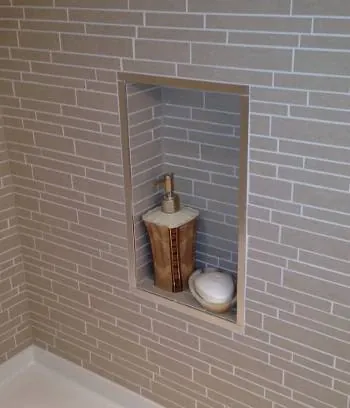
Tiled Recesses (Niches) come in three Variations:
i) A Custom Tiled Niche:
- Requires the construction of a framed box between the wall studs, which means that it's outside width is less than 14 1/2 inches (typical width of stud bay). This also means that this niche stays within it's chosen stud bay and only extends vertically up the stud bay if more storage is required. The niche box is then covered with tile backer board, waterproofed, then tiled. The main benefit of this type is that it can be built to any custom size (height) and can contain multiple shower shelves.
ii) Custom Horizontal Tiled Shower Niche:
- The question "what is a shower recess" wouldn't be complete without mention of the horizontal niche. This niche requires the construction of a recessed, framed, horizontal box that spans two or more stud bays. This requires cutting away a section of one or more wall studs, so structural reinforcement of the shower wall is required during construction. The interior of the box is then covered with tile backer board, waterproofed, then tiled. This type is the most costly, most time consuming, and most error prone of all the niche types.
iii) Prefab Niche, or Preformed Shower Niche:
- These are the easiest recessed tiling niches to install and waterproof. It can be made of plastic, foam board or stainless steel and it’s surface is designed to be tiled upon (has a tile bonding surface). Most prefabs fully integrate with the shower wall waterproofing membrane via their mounting flange. They are available in only a few standard sizes.
Finished Niche
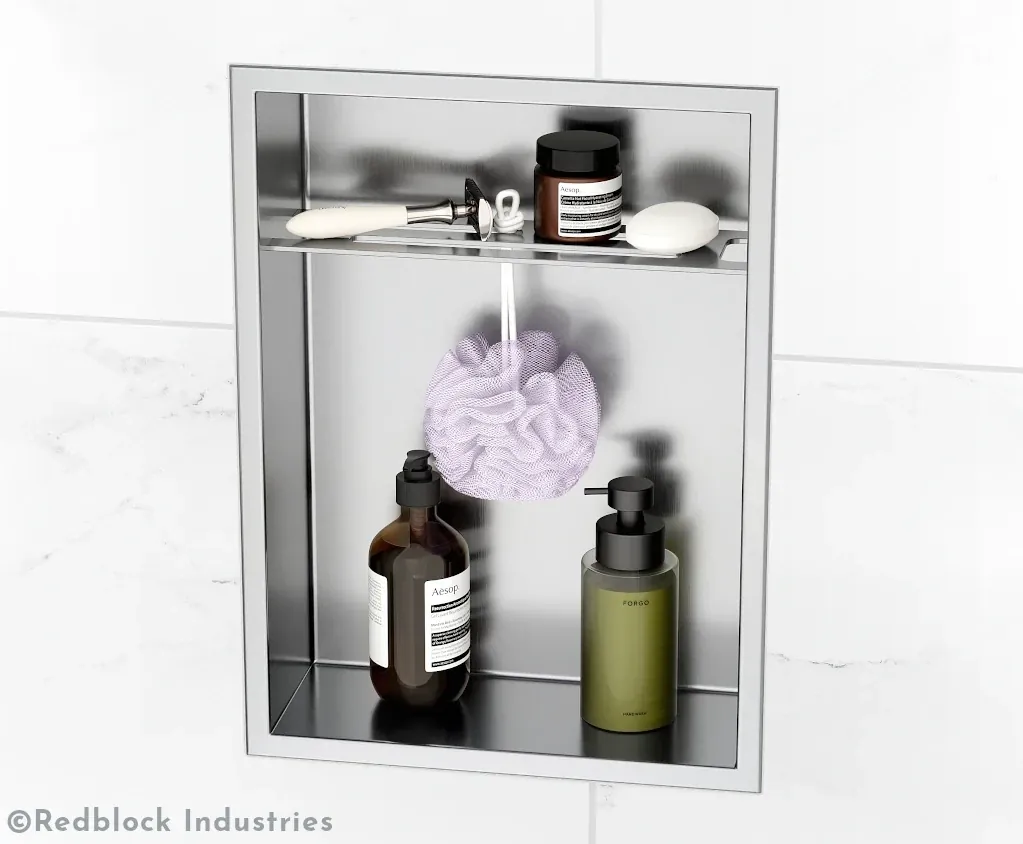
Finished Niches Come in Two Variations:
i) The membrane bonding niche has an outer flange for bonding to the waterproofing membrane and attachment to the framing. They can be made from stainless steel or porcelain. These are much easier (and cheaper) to install than a tiled shower niche.
ii) The retrofit niche mounts into a hole in the finished tile, & fastens to the tile surface with silicone adhesive. They can be made from stainless steel, porcelain or plastic. This type is the easiest to install but DOES NOT bond with the waterproofing membrane so there's a significant risk of water leaks into the shower wall.
Shower Niche Pros and Cons
To explore the question "What is a shower recess?, it's helpful to review the pros and cons of each type.
Custom Tiled Shower Niche
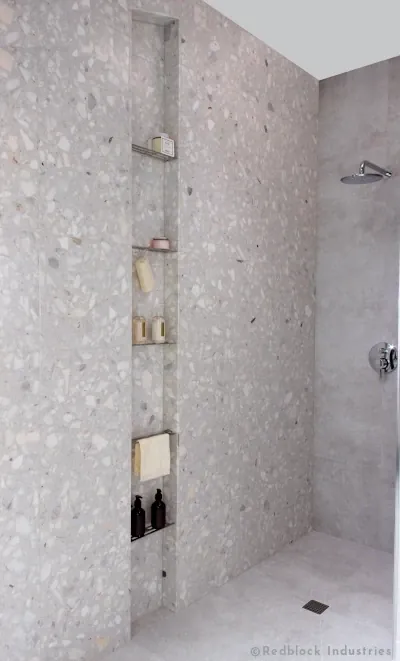
Pros: The Custom Built Tiled Shower Niche can be built to almost any size, cater to any design scheme, and can be made waterproof. Vertical niches can increase storage with less cost than horizontal niches.
Cons: Risk of water leaks if built poorly and are more costly than other types of non-recessed shower shelves.
Custom Tiled Horizontal Shower Niche
Pros: A custom built tiled horizontal shower niche is a bold statement of luxury with a larger storage capacity than other niche designs.
Cons: The greatest amount of time (and cost) for construction, risks of structural damage during shower wall modification, and only a single recessed shelf for storage.
Prefab (Tile Ready) Shower Niche Insert

Schluter Kerdi Niche
Pros: The tile redi prefabricated /preformed shower niche products are easy to install and already waterproof (sealed foam board construction).
Cons: Some say that they are easily damaged during handling and only available in limited number of sizes
Finished Shower Niche with Membrane Bonding

Redblock Stainless Steel Niche
Pros: This style of shower niche is completely finished so there is no need for tiling, which means easier / cheaper installation, waterproof design, easy cleaning and 316 grade stainless steel. It also has a built in tile trim and perimeter mounting flange to integrate with the waterproofing membrane.
Cons: Some say the look is too bold (stainless steel type - see image).
Finished Overlap Shower Niche (no Membrane Bonding)

Stainless Steel Overlap Niche
Pros: This type of shower niche is relatively easy to install and has a finished surface, so there is no tiling required.
Cons: Installation requires a full shower remodel (after tiling is complete). It cannot be installed in an existing shower (as some manufacturers claim), is attached to the shower wall with a single bead of silicone, and it does not integrate with the waterproofing membrane.
Niche Install Considerations
Size & Height:

Once you've decided on installing some type of recessed storage, then you'll need to figure out how large, where and how high you want your new niche. Do you want a large shower nook with plenty of storage for a large family, or is aesthetics more of a priority for you?
Where should your niche be positioned? Do you want quick access to products while standing in the water stream, then installation into the valve wall might be appropriate. If you don't want all your shower items to be constantly drenched with water, maybe installation into opposite wall, or into the long "back" wall might better suite your needs.
And what about height? Are you vertically challenged or perhaps you have kids that will be using the shower regularly? You must pick a height that suites all your needs.
Get more details from my Shower Niche Height or my Shower Niche Sizes posts.
Install Problems:

To properly answer the question of "what is a shower recess" we must also go over some of the potential problems of installing one. No matter which shower niche you decide to install or where you install it, there are some important guidelines that must be followed to avoid some BIG Problems like…
No Waterproofing
Many old-school contractors still do not routinely install shower wall waterproofing membranes. As such, leaks at the shower wall corners and the wall to base corner are common with no membrane.
Overlap Niche Installation
Fitting an overlap niche into a hole in the shower wall and gluing it to the tile by a tiny silicon bead is always a bad idea. The inevitable result is water leaking into the stud wall, mold, water damage…… you get the idea.
No Membrane Integration
Most finished shower niche products do not have built in flange for attaching to the waterproofing membrane. Whether you buy finished niche or a prefab tile ready niche, you must make sure it is bonded to the membrane.
Compromising Wall Structure
Construction of a custom horizontal tiled niche involves removing a section of the wall studs that support your shower wall. If this procedure is not done correctly by someone qualified, it can seriously compromise the structural integrity of the shower wall.
Outside Wall Installation
It is generally not recommended to mount a shower niche in an outside wall, especially in older homes. You can probably get away with it in a milder climate if the stud wall thickness is 6″ or more but you should check with a local building professional.
Get more details from my 7 BIG Shower Niche Problems post.
Shower Wall Recess vs Other Shower Storage

After the above discussion about "what is a shower recess", you may have decided that this type of permanent shower storage might not be your thing. As such, I thought I would include a short section contrasting other shower storage options with the shower recess (or niche).
Shower Caddy
A popular and cost effective temporary shower storage option is the classic shower caddy. These can take the form of racks suspended between you shower floor and ceiling or be hung from the shower head or shower door.
Caddies can be very effective for many years, but can also fall apart and some can cause damage to your shower floor or ceiling.
Shower Shelves and Racks
Other more permanent but slightly more obtrusive shower storage are the wall mounted corner shelves and shower racks.
These come in a infinite array of styles and sizes in stainless steel, coated steel, wood and plastic varieties.
Floor Racks & Baskets
And slightly more obtrusive again are the floor racks and baskets. These storage options can be more useful because of their larger size and multiple shelves.
The downside is that they tend to take up valuable floor space in the shower and tend to get kicked and tripped over.
Shower Niches
One of the most "permanent" shower storage option is the shower niche (finished or tiled), which requires a full remodel of your shower.
A shower niche is fully recessed into the shower wall so it (and all your shower items) stay out of the way during showering.
A very clear downside is the higher cost compared to the other available storage options out there.
See more Hanging Shower Caddy ideas here.
FAQ
How deep is a shower recess?
Most shower prefab niches and finished niches are 3 1/2 inch deep due to match the depth of standard shower wall framing. It's possible to create a 5 1/2 inch deep niche if you're building it custom into a 2x6 stud wall, but it's not recommended for exterior walls.
Are shower niches a good idea?
Shower niches are a great idea because they are recessed into the shower creating no obstructions. The chance of water leaks into your shower wall can be almost eliminated with a prefab niche, as long as you hire a qualified shower remodel contractor.
How do you install a shower recess?
The best, easiest, and safest way is to install a tile-ready, prefab foam niche from one of the many prefab niche manufacturers. Install is easy during a full shower remodel by first installing back framing between the studs, above and below the niche install location, then screw the perimeter install flange against the framing and one of the adjacent vertical studs to support the niche on at least three sides. Then finish the backer board install on the shower wall around the niche.
What is a Shower Recess - Wrap Up
I hope you were able to get some useful advice from my "What is a Shower Recess"post (and the linked content) to help you during your shower remodel project.
If you’d like to write a comment about the array of Shower Niche topics I’ve covered in this post or what topics I may have missed, please let me know in the comments below.
I look forward to hearing from you!
* This post is for information purposes only and should NOT be interpreted as professional advice. You should always consult a licensed local contractor before undertaking any remodeling work in your home. Click here for my full Personal / Professional Disclosure. *